ONOZU — UNITED KINGDOM
Winter Light Along the River Ness
Along the River Ness in Inverness, bare branches, bridges and moving water offer different ways to notice the quieter light of winter.
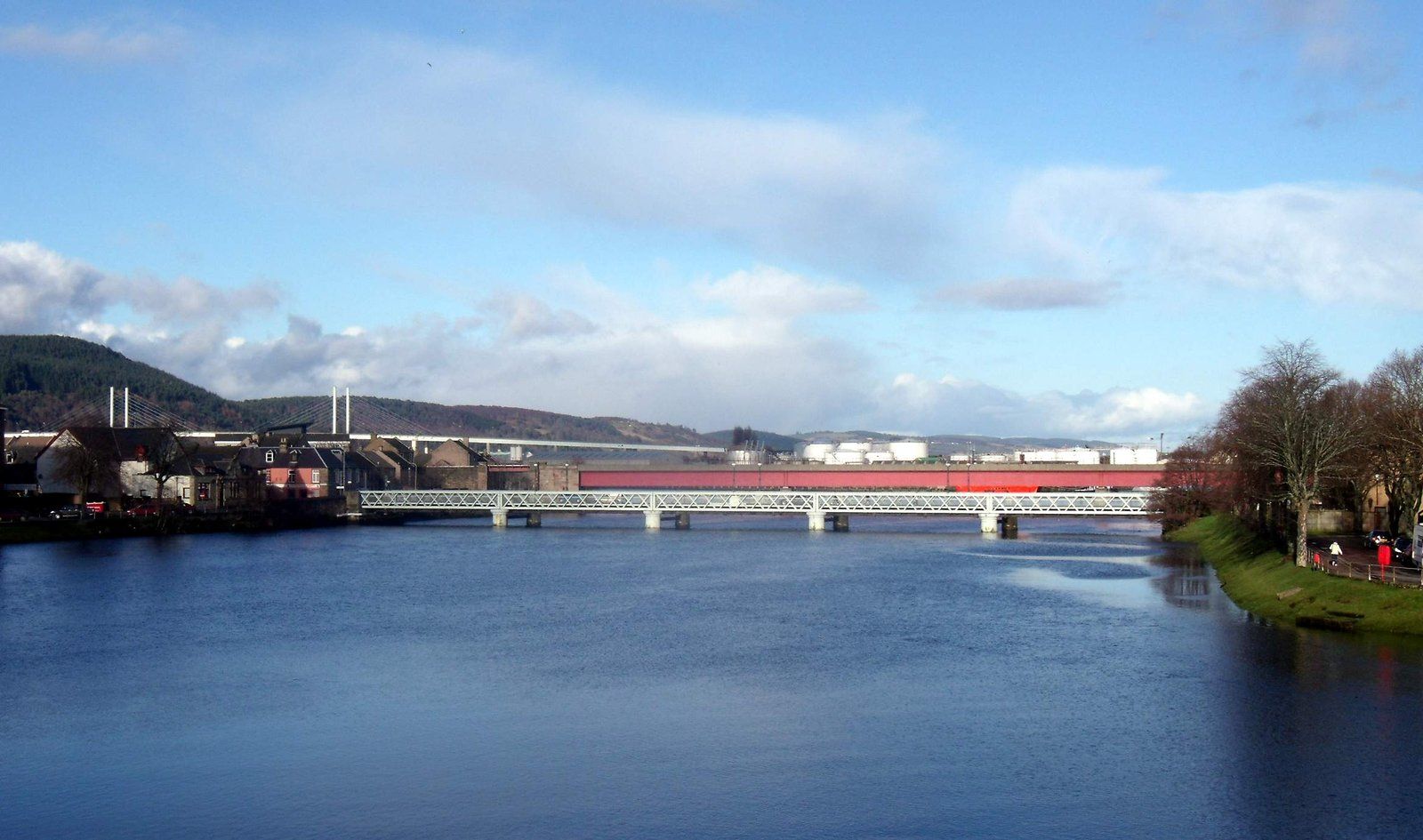
River Ness - Inverness Scotland from Friars Bridge by Dave Conner. Source, licensed under CC BY 2.0. Auto-oriented, resized without enlargement, metadata stripped, and recompressed; responsive AVIF/WebP derivatives are generated at build time.
.jpg)
A river gives winter light a surface that never quite settles. Along the Ness in Inverness, the view includes buildings, trees and bridges, but the water keeps rearranging their reflections. A pale strip of sky can stretch into a broad patch, break into short lines and disappear beneath the next disturbance. The brightness belongs to a direction as much as to a colour.
From the bank, it is possible to look at the same reach in two ways. Looking downstream brings the bridges and the edges of buildings into a sequence. Looking across the water gives more attention to the surface: small ridges, broken reflections and changes beside the bank. Neither view stays complete for long.
Branches against a pale sky
In winter, deciduous trees offer fewer broad surfaces to catch the light. Their branches become fine marks against the sky, overlapping where the crowns meet and separating again above a gap. Dark trunks hold the near edge of the scene while the smaller twigs seem to belong to the air behind them.
This openness makes riverside structures easier to see. The outline of a bridge is no longer partly hidden by leaves. Windows and rooflines enter the spaces between branches. The river remains the main moving element, but the bank has acquired a more intricate framework around it.
Cloud cover changes how much of that framework reaches the water. Under an even grey sky, reflections can look subdued and continuous. A brighter opening introduces sharper pale fragments. Near a rougher patch of surface, they break so quickly that it is easier to follow their movement than identify the thing being reflected.
A view with room for movement
Standing beside a river also changes the sense of time. A bridge offers a fixed point, yet the surface beneath it cannot be revisited in exactly the same form. Watching one small area for a minute is enough to see several patterns replace one another.
The photograph accompanying this note was made from Friars Bridge in Inverness in February 2010. It provides a view of the river and its surroundings, rather than a report on present conditions. The words are a seasonal reflection, not a diary of an unrecorded visit. What matters here is the relationship between the steady outlines of the city and water that carries each patch of light onward.